Industry News
QYTeco is a professional solution provider for industrial inspection cameras and sewer drain cleaning machines.
Language
The technical differences between AHD (Analog High Definition) and Regular Analog Cameras mainly lie in the signal transmission mode and image quality:
Technical principle.
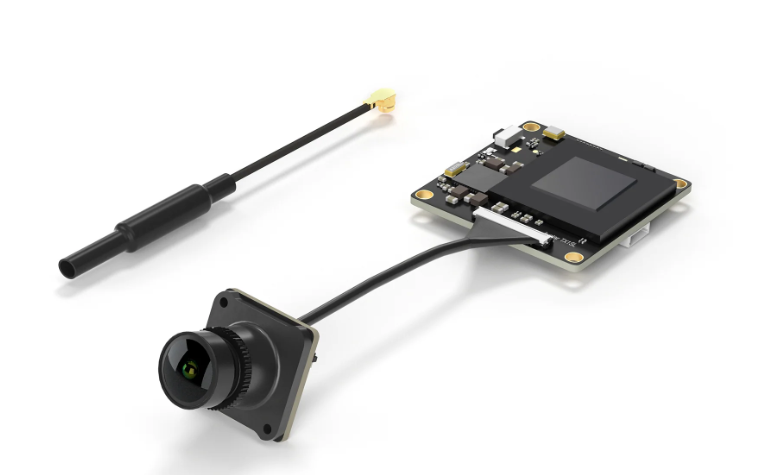
AHD adopts analog high-definition technology , achieving high-definition video transmission by optimizing transmission rate and resolution.
And It is compatible with traditional analog devices. Regular analog cameras adopt traditional video transmission technology, which has relatively low resolution and transmission rate.
Signal Transmission
AHD supports 720P/1080P resolution and transmits high-definition video signals via coaxial cable without the need for additional network equipment.
The resolution of ordinary analog cameras is usually 480P or lower, and they need to rely on dedicated video cables or network connections.
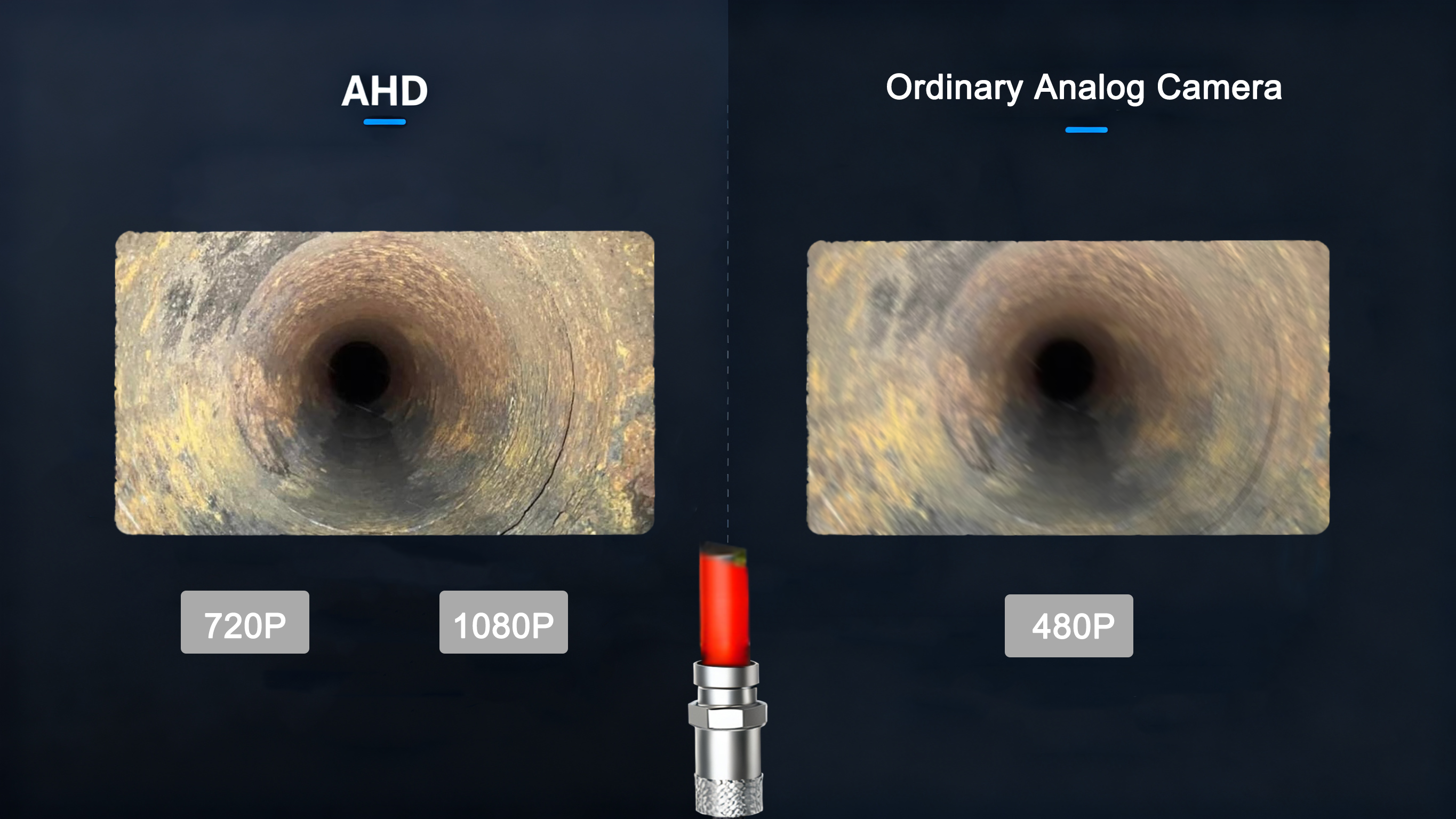
Image Quality
AHD can provide clearer and more anti-interference images in low-light or interference environments, and supports infrared automatic switching and color-to-black conversion functions.
Regular analog cameras may have problems such as noise, blurriness or color distortion.
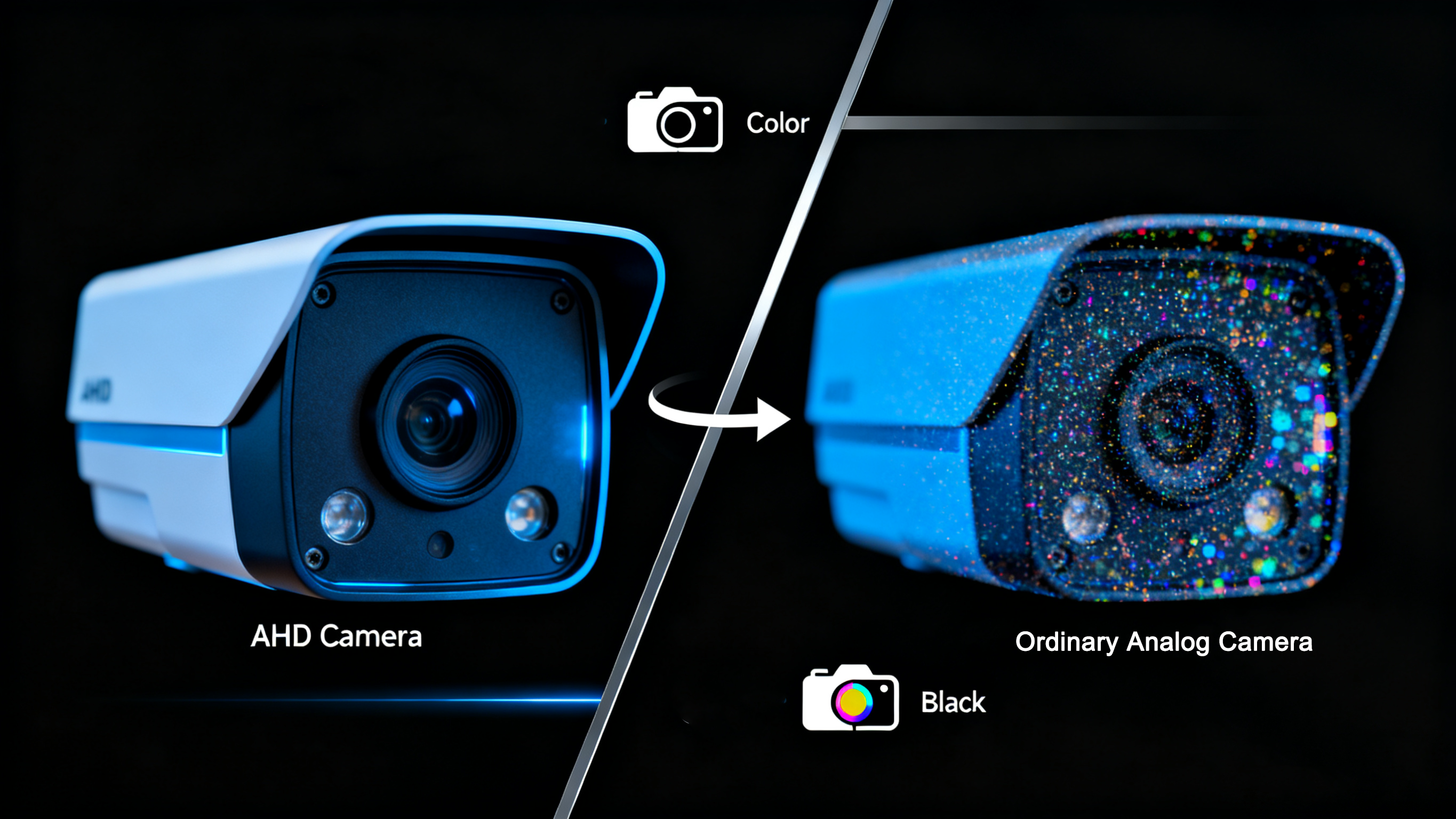
Compatibility
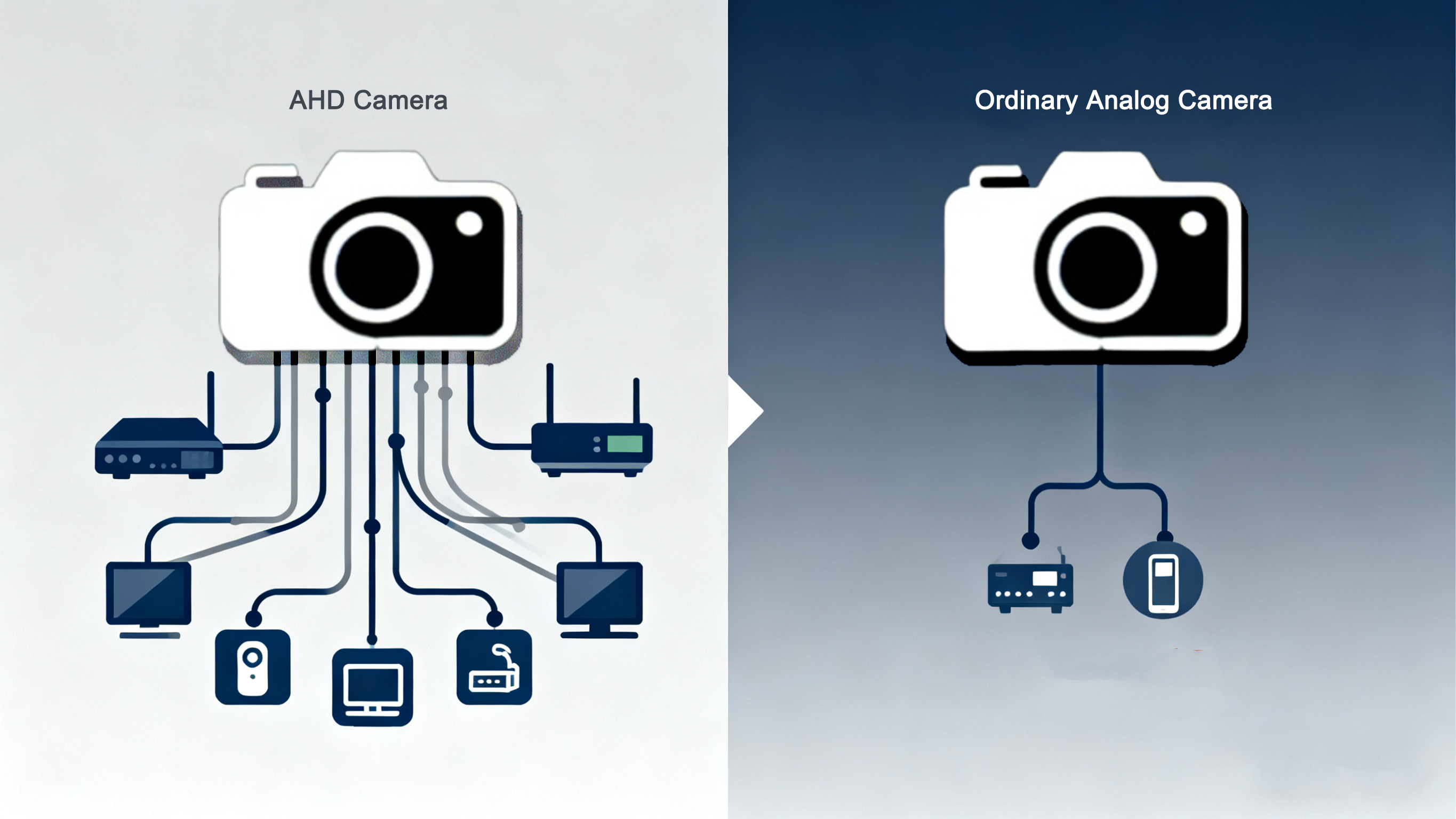
AHD is compatible with traditional analog video recorders and digital high-definition devices, and its backend is not restricted by brand.
Ordinary analog cameras only support limited compatibility with peripheral devices.

Manufacturer and supplier of HD sewer drain pipe CCTV inspection camera system, flex shaft cleaning machines, trenchless equipment, cavity wall inspection camera tool, rigid/flexible articulating borescopes, barrel borescopes, HD videoscopes, endoscopes.